Education
Why One Training Program Doesn't Fit Everyone
November 2026 · 4 min read
Every body has a different starting point. Your training should reflect that. Have you ever followed a workout program that worked for someone else, but didn't seem to work for you?
Perhaps your friend gained strength quickly, while you struggled with mobility. Or someone else achieved their fitness goals through high-intensity training, while your body needed a more gradual approach.
The reason is simple: people do not share the same physical condition, movement capabilities, health goals, or daily routines.
A training program should not simply follow what works for others. It should be designed around what your body needs.
1. Every Body Has a Different Starting Point
Before building strength, improving endurance, or enhancing performance, it is important to understand where your body stands today.
Factors such as physical activity history, movement quality, strength, mobility, previous injuries, and current fitness levels can influence how a training program should be approached.
For example:
- Someone who spends most of their day sitting may need to prioritize mobility and foundational strength.
- Someone who regularly exercises may benefit from a more structured performance program.
- Someone returning from an injury may require a rehabilitation-focused approach before progressing to higher training demands.
These individuals may share similar fitness goals, but their starting points are not necessarily the same.
The right training begins with understanding the individual, not selecting a generic workout.
2. Your Goals Determine Your Training Approach
Not everyone trains for the same reason.
Some people want to improve their strength. Others want to move more comfortably, return to physical activity after an injury, improve athletic performance, or maintain their long-term health.
These goals require different training priorities.
For example:
- Strength Development: Building muscular strength through structured resistance training.
- Mobility & Movement: Improving movement capacity and control through appropriate exercises.
- Rehabilitation: Restoring physical function and gradually rebuilding capacity following injury or physical limitations.
- Performance Enhancement: Developing strength, endurance, power, and physical capabilities relevant to specific activities.
A well-designed training program considers these objectives instead of applying the same exercises and intensity to everyone.
3. Recovery Is Part of the Training Process
Training is only one part of physical development. Recovery also plays an important role.
Sleep quality, daily stress, physical activity outside the gym, nutrition, and previous training load can influence how someone tolerates exercise.
This means that a training schedule that feels manageable for one person may be too demanding for another.
Understanding recovery capacity helps determine appropriate training intensity, volume, frequency, and progression.
The objective is not simply to train harder.
It is to train with the right level of challenge while allowing the body to adapt over time.
4. Why Assessment Should Come Before Training
If every individual has different needs, how do we determine the right training approach?
It starts with assessment.
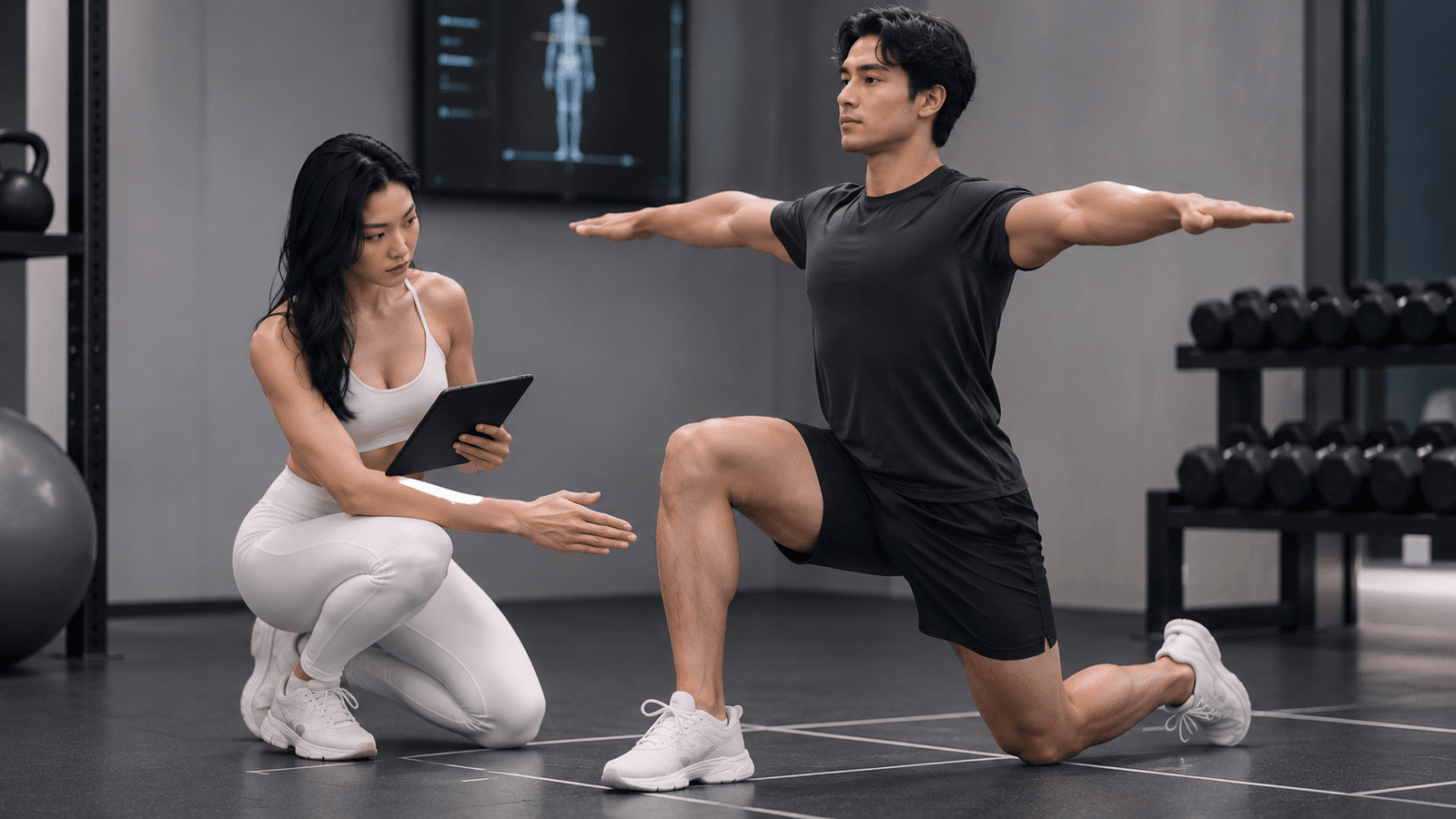
An assessment helps establish a clearer understanding of an individual's physical condition, movement capabilities, and training priorities.
Depending on the individual's needs, this may involve evaluating:
- Mobility and range of motion
- Stability and movement control
- Strength and muscular endurance
- Posture and movement patterns
- Relevant physical limitations and training history
- Individual goals and lifestyle considerations
These findings provide a foundation for making more informed training decisions.
Assessment is not about labeling a body as good or bad. It is about understanding what needs attention and establishing a suitable starting point.
5. A More Personal Approach to Human Performance
At AxisLab, we believe that training should be built around the individual.
As a Human Performance & Structural Training Lab, our approach combines personalized training, movement science, and physiotherapy to address how people move, perform, recover, and live.
Our training philosophy follows three essential principles:
Alignment - Returning to foundational movement and addressing areas that need attention.
Balance - Developing awareness across different aspects of physical health and movement.
Progress - Building intentional, sustainable development over time.
Rather than following a one-size-fits-all approach, we focus on understanding individual needs and creating a training direction that fits each person's body and lifestyle.
Because the goal is not to build the same body for everyone.
It is to build a body that fits your life.
Build a Program Around Your Body
Your fitness journey should begin with understanding your body, not comparing it with someone else's progress.
The right approach considers your current condition, personal goals, and long-term health.
At AxisLab, every program begins with a more thoughtful approach to movement and individual needs.
Start with understanding your body. Build with intention. Progress with purpose.
Discover a more personalized approach to training at AxisLab.
Book your complimentary assessment and take the first step towards building a body that fits your life.
AxisLab — Human Performance & Structural Training Lab